
Sewing Essentials – My Actual Kit
A calm, clutter-free list of the tools I actually reach for at my sewing table—curated for home sewists who want beautiful results without buying the entire notions aisle.
Every item below is something I personally use, a close approximation (some of my tools I've had for over a decade), or what I would confidently buy as replacements. I have included Amazon links so you can build (or upgrade) your own legacy-worthy kit without a tool research wild goose chase.
Note: These are affiliate links, which means I would earn a small commission at no extra cost to you. I only recommend tools I genuinely love and use.
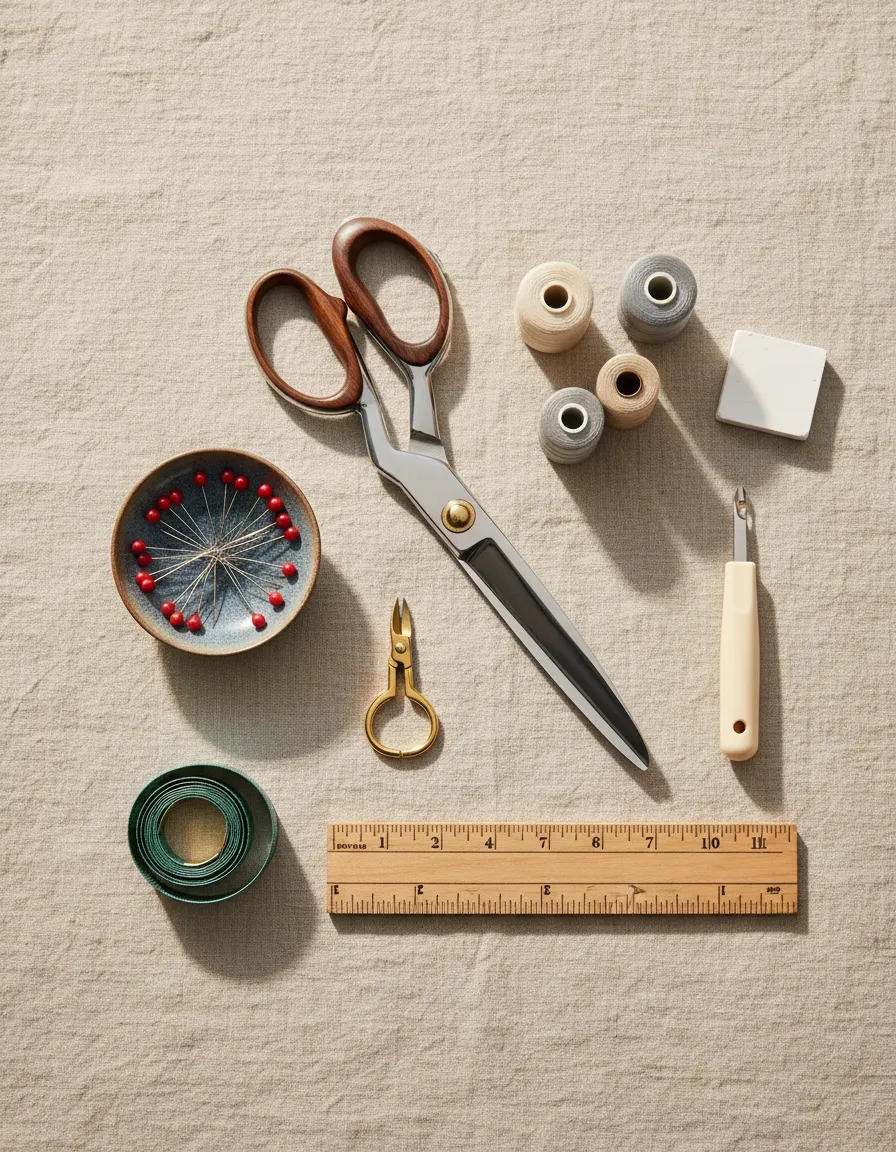
A thoughtful kit for everyday sewing
Whether you are testing a hemming technique, piecing heirloom linens, or finally starting that dress pattern you’ve been saving for years, a small set of well-chosen tools makes the process calmer, neater, and more enjoyable.
Instead of an overwhelming checklist that sends you off to choose brand, quality, or quantities, this guide focuses on presenting a compact, proven kit: the scissors, markers, rulers, needles, and notions that earn their spot on my table and travel pouch.
Start with a small, elevated "kit" instead of a junk drawer of tools.
Invest once in quality pieces you will not need to constantly replace.
Choose items that feel good in hand, not necessarily what is cutest.
Why this kit works so well
You do not need every gadget; you need a small number of reliable, well-chosen pieces. This kit is built around:
Fewer, better tools
Every item earns its place. If a cheaper version or even generally trusted brand items frustrated me or wore out quickly, it did not make the list.
Safety First
Even if you don't have 5 children running around you while you sew like I do, fewer unnecessary items around to accidentally shish-kabob or slice you is always better!
Beginner-friendly, heirloom-ready
If you are just starting, this kit will carry you far. If you are more advanced, it is still solid enough for detailed garment sewing and heirloom pieces.
Easy to buy in one sitting
Everything is linked on Amazon so you can build your kit in one calm, intentional shopping session—no hunting across ten websites. Think of me as your shopping coach, here to keep you calm and focused.
How to actually use this page
Think of this as a quiet, guided shopping trip. No flashing banners, no endless scrolling—just the pieces I truly recommend and how they fit together.
- Scroll through the kit and start with the basics: cutting, measuring, marking, and stitching.
- Open each Amazon link in a new tab, then add or remove items based on what you already own.
- If you are brand new, copy the full list and adjust only for color or handedness (left/right-handed tools).
- Save or bookmark this page so you can return to it when you are ready to add a new project or upgrade a tool.
Every tool in my basket
Below, you’ll find a full breakdown of my sewing essentials, organized by category with notes on how and why I use each one. Click any product name to open it on Amazon and add it to your own kit.
Sewing Essentials — My Actual Kit
If you're building your sewing setup, these are the tools I actually use, trust, or would buy again. I care a lot more about reliability, comfort, and long-term value than buying a giant discounted bundle of random supplies.
In most cases, Wawak is my primary recommendation because the prices are often dramatically better and the product selection is more trustworthy. I’ve included Amazon links where they genuinely make sense—usually for convenience, smaller orders, or a specific item/pack format that’s easier to grab there.
How to use this page: if you’re just replacing one or two items, Amazon may be simpler. If you’re setting up a sewing space or buying several basics at once, Wawak will usually be the better value. Some links on this page may be affiliate links, which means I may earn a small commission at no extra cost to you.
Rotary Cutting Kit
The kit on Wawak is your best value. It’s not the best size for full garment construction, but it’s great for beginning and smaller projects.
Measuring Tape & Seam Ripper
Great brand, hard to beat the value, and I didn’t find a good equivalent on Wawak.
Seam Ripper & Snips Pack
My exact tools. Off-brand, but they’ve been great. Seam rippers do dull over time, and four is not overkill because they somehow also get lost.
General Sewing Kits
Not recommended. Quality across that many discounted items is too hard to monitor, and it’s easy to build a smaller kit that actually fits your needs.
Fabric Shears
The spring makes it possible to cut for longer and is friendlier to sensitive hands. Titanium on Wawak is about the same price and should stay sharper longer.
Thread Snips
Again, the springy kind. Not sure why these are more expensive on Wawak, so Amazon may make more sense here.
Rotary Cutter
Same as in the kit. I do not recommend off-brand for these. The engineering needs to be good or there’s more safety risk. The Wawak design looks nice, but I’d still go with the full kit.
Replacement Blades
Have a designated sharp-objects disposal jar in a safe place. Dispose of it safely when full.
Cutting Mat
Wawak’s Duracor mats are a good brand option with several size choices. For most people, I’d choose based on the largest surface you realistically have room to use.
Small or Medium Cutting Mat (Amazon)
The small mat is fine for baby items and some children’s sewing. The medium works for some adult garments. I still use mine when I’m not cutting larger pieces.
Sewing Ruler
Non-negotiable. These are designed to be used with a rotary cutter. Other rulers will damage or be damaged by the blade.
Sewing Machine
This is the model I currently use. I do not love it for everything, but it is a pretty solid workhorse, and I like that I can take it apart and oil it myself. Wawak does not carry machines.
Thread
Gutermann is always recommended. Avoid off-brand thread, even for learning. Cheap thread breaks easily and causes frustration. My recommendation: get the gray pack from Wawak for seams, and a color pack from Amazon for topstitching. Video on how I choose thread coming soon.
Sewing Machine Needles
Great for linen, most weaves, heavier silk, and some knits. Chrome is a must in my book because it lasts longer and drags less on fabric. I added the non-stick option from Wawak because they no longer carry chrome there.
Bobbins
This model works in the Singer machine I recommended. Bobbins are not universal, so research matters. It truly sucks to get stuck without enough when you need one, so err on the side of too many.
Bobbin Organizer
I have the Wawak version, but the hinged-lid version I linked on Amazon actually makes more sense and is slightly cheaper.
Hand Sewing Needles
These are my favorite needles and excellent for all kinds of handwork. They are ridiculously cheaper on Wawak. I only see Amazon making sense if you’re upgrading just a couple of items.
Thread Wax
I almost forgot how critical this is for hand sewing. It cuts down on a lot of frustration, especially when working with linen thread.
Measuring Tape
Super cheap on Wawak, or get a loose tape and a retractable one and see which you prefer. Extras never hurt, they also tend to wander off somehow.
Sewing Ruler
If you do not want the rotary cutting kit, I would still get the long Wawak ruler over anything else. A fatter quilter’s ruler is not generally necessary for non-quilting.
Marking Pen
Not their intended purpose, but I prefer Frixion-style pens to fabric pens or chalk. They are more consistent, and heat or water erases them just as well.
Chalk Fabric Pen
For dark fabrics. I’d just get white, then use cheaper Frixion pens on lighter fabrics. The white heat-erase pens don't tend to show up well enough on dark fabrics.
Clips
I recommend these over pins. I do not enjoy accidentally stabbing myself more than already necessary.
Pins + Magnetic Storage
Necessary occasionally. I mostly use pins in buttonhole finishing, and honestly you could also just use a safety pin.
Weights
Do not get them. This is one of the dumbest sewing products I know. I will eventually do a whole video on the ridiculous DIY alternatives that make these a moot point.
Seam Ripper
I still recommend the snips and seam ripper pack above, but rippers do dull over time.
Turning Tools
An assortment is useful while you’re discovering what you like. I’d start with the variety pack before spending more on specialty tools.
Iron
I’ve used a very basic home iron for the past 12 years. Just buy one with good ratings and treat it well. Wawak doesn't make sense in this category.
Ironing Board
Again, Wawak’s options are not especially beginner- or hobby-friendly. You can hang these in the closet now, which is excellent if your space has to stay flexible.
Wool Pressing Mat
Wawak does not have a good equivalent here. This is a great smaller-space alternative with excellent moisture-holding properties, and it is much harder to accidentally singe your material.
Spray Bottle / Starch
For hard wrinkles. Glass is recommended, but not a must. Do not reuse bottles from chemicals or anything fragrant.
Sewing Essentials — My Actual Kit
If you're building your sewing setup, these are the tools I actually use and recommend. I prioritize reliability over cheap bundles, because bad tools will slow you down more than anything.
The links below are affiliate links, which means I may earn a small commission at no extra cost to you.
Rotary Cutting Kit
Includes the essentials. The folding mat is especially useful if you’re short on space.
ShopMeasuring Tape & Seam Ripper
A simple, reliable starter combo from a brand I trust.
ShopSeam Ripper & Snips Pack
Off-brand, but these have been great. Seam rippers dull over time, and somehow they also vanish.
ShopLarge General Sewing Kits
Too many low-quality items in one bundle. I’d rather build a sewing kit intentionally.
Fabric Shears
The spring makes it possible to cut for longer and is much friendlier to sensitive hands.
ShopThread Snips
Again, the springy kind. Tiny comfort upgrades matter when you use them constantly.
ShopRotary Cutter
I do not recommend going off-brand here. The engineering needs to be good or there’s more safety risk.
ShopReplacement Blades
Keep a designated sharp-objects disposal jar in a safe place and dispose of full containers responsibly.
ShopSmall Cutting Mat
Fine for baby items and some children’s sewing. This was my first mat, and I still have it.
ShopMedium Cutting Mat
Better for some adult garments. I still pull this out when I’m not working on larger pieces.
ShopSewing Ruler
Non-negotiable. It’s designed to be used with a rotary cutter. Other rulers will damage or be damaged by the blade.
ShopRotary Cutting Kit
Worth repeating. The folding mat is brilliant, especially if your space has to multitask.
ShopBasic Sewing Machine
Similar to the model I started on. Like most machines, it comes with its own operational basics.
ShopThread (Gutermann)
Always recommended. Cheap thread is terrible even for learning—it breaks easily and causes frustration.
ShopUniversal Chrome Needles
Great for linen, most wovens, heavier silk, and some knits. Chrome lasts longer and drags less on fabric.
ShopHand Sewing Needles
These are my favorites for handwork. Excellent quality, large pack, and you may never need more.
ShopBobbins
It truly sucks to get stuck without enough when you need one. Err on the side of too many.
ShopMeasuring Tape
Try both a loose tape and a retractable one and see what you prefer. They also tend to wander off somehow.
ShopSewing Ruler
I’ve tried off-brand. I do not recommend it. If you nick the cheap ones, they get messed up fast and your blade becomes useless too.
ShopFrixion Marking Pens
Not their intended purpose, but I prefer these to fabric pens or chalk. They’re more consistent and heat or water removes them just as well.
ShopChalk Fabric Pen
Best for dark fabrics. I’d just get white, and use cheaper Frixion pens on lighter fabrics.
ShopWeights
Don’t get them. This is one of the dumbest sewing products I know. Use heavy things you already have at home instead.
Seam Rippers
I still recommend the rippers and snips pack above, but if you want extras, rippers dull over time.
ShopIron
I’ve used a very basic iron for the past 12 years. You do not need anything fancy—just treat a well-rated one well.
ShopIroning Board
You can hang these in the closet now, which is excellent if your space has to stay flexible.
ShopWool Pressing Mat
A great smaller-space alternative. Excellent moisture-holding properties for pressing, and much harder to accidentally singe fabric.
ShopSpray Bottle
For hard wrinkles. Glass is recommended, but not required. Do not reuse bottles that held chemicals or fragrance. Ew.
ShopWhat to do after your kit arrives
This page was all about choosing a calm, thoughtful kit of sewing tools. Now the focus shifts to using what you have with confidence—setting up your space, learning gentle routines, and avoiding the early mistakes that cause overwhelm.
Ready for the next step? Use this quiet, practical checklist to set up your sewing corner, break in your tools, and sidestep the most common beginner missteps.
A NOTE FROM THE STUDIO
Sewing feels different when your tools keep up with you.
The first time I gathered all of these pieces into one place, I realized how much they changed my actual sewing experience. Less time hunting for my "good" pair of scissors; more time finishing pieces I am proud to wear and answer, "Thank you, I made it myself!"
– Linen & Legacy
Questions, answered simply
If you are new to sewing—or just new to building a proper kit—these quick answers might help. You can always adapt this list to your own projects and preferences.
Do I need to buy everything at once?
Absolutely not. You can treat this page as a long-term reference. Start with what you need for your very next project (often: shears, pins, marking tool, measuring tape), then come back for pressing tools or specialty notions as you grow.
Are these tools beginner-friendly?
Yes. I have intentionally chosen pieces that feel approachable for beginners but still high-quality enough that you will not quickly outgrow them. If something is more advanced or optional, I note that in the description beside the Amazon link.
What if an item is out of stock on Amazon?
Stock can shift, but the product descriptions give you clues on what to look for—material, size, and key features. Use those notes to choose a close alternative if the exact item is unavailable in your region.
Do you earn money from these links?
The links are affiliate links, which means I may earn a small commission if you choose to purchase through them. It does not change your price, and I only include items I genuinely use and would buy again, or a version I know I would prefer over what I already have..
Ready to build your own Linen & Legacy kit?
Take ten quiet minutes, work through the list, and order the pieces that feel right for you. The next time you sit down to sew, everything you need will be waiting neatly at the ready..
Linen & Legacy · Sewing Essentials – My Actual Kit
Some links on this page are affiliate links. As an Amazon Associate, I may earn from qualifying purchases, at no additional cost to you.